
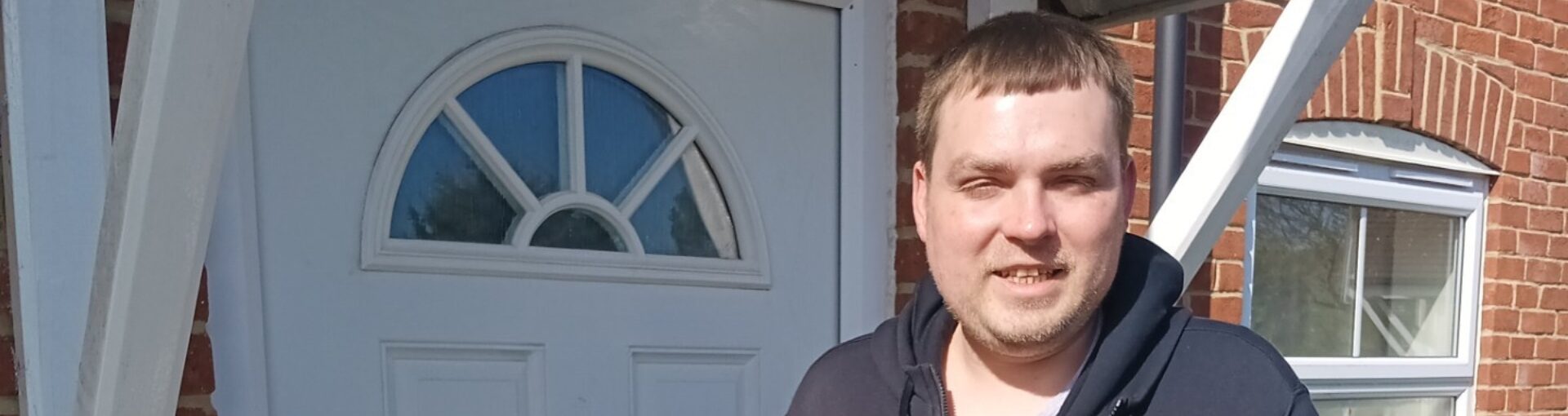
Scott’s journey to independent living
When Scott moved into Response’s Palm Court service in 2017, independent living felt a long way off. Over the years, with the right support, he developed the confidence and practical skills he needed to take that next step.
Relocating meant leaving behind familiar surroundings and previous support networks while adapting to a new community and managing the ongoing impact of his mental health difficulties.
Over the years, Scott worked towards developing his independence, maintaining his treatment and building the skills and confidence needed to move into his own accommodation.
Living with mental health and physical health challenges
Scott has a diagnosis of paranoid schizophrenia and has experienced symptoms associated with his condition, including hearing voices and holding beliefs that were not shared by others. At times, he also experienced increased anxiety and poor sleep.
Scott also has Type 2 diabetes, requiring ongoing monitoring and medication, and attended regular health appointments, including reviews with a diabetic nurse. Scott’s commitment to engaging with treatment and clinical services has remained an important part of maintaining his wellbeing.
A further challenge for Scott was social isolation. Whilst he engaged appropriately with staff and fellow residents at Palm Court, he generally preferred a structured routine and could find it difficult to expand his social networks or engage in unfamiliar social situations.
Despite this, Scott found his own ways to build connections within his local community. Every Friday afternoon, he would go out for lunch and chat with people he had got to know in local shops and cafés.
Building independence at Palm Court
Throughout his time at Palm Court, Scott developed strong independent living skills. He maintained his tenancy well, kept his home clean and organised, and managed tasks including cooking, laundry, budgeting and household management.
He also remained engaged with the wider Palm Court community, regularly attending coffee afternoons and residents’ meetings. These activities helped him maintain social connections and remain involved with the service.
Scott’s long-term goal was to move into his own independent accommodation. From April 2025, his support worker helped Scott navigate the housing application and bidding process. Scott remained focused on his goal and secured a property in October 2025.
“I felt supported, listened to and respected throughout my time with Response. The practical, emotional and tenancy support I received made a real difference, and the consistent guidance and advocacy helped me build the confidence and skills I needed to successfully move into independent accommodation.”
 Scott
Scott
Preparing for a new home
Securing the tenancy was an important achievement, but the move itself brought a number of challenges.
Scott had finally secured a home of his own, but his move did not happen straight away. Delays to the refurbishment works meant his move-in date was postponed several times. Although the delays made Scott anxious, he coped well with the uncertainty, showing resilience and reaching out for support when he needed it.
Regular support sessions provided Scott with reassurance and helped him remain focused on the fact that the tenancy remained secure. Staff maintained frequent contact with his new housing provider and administration team to obtain updates and support the move forward.
Scott was actively involved throughout the process. He monitored correspondence, checked emails relating to his tenancy application, and approached staff when he needed help with administrative barriers or clarification.
He also researched and ordered furniture, household items and furnishings, and took an active role in choosing how his new home would be furnished and decorated.
Staff supported Scott with the practical arrangements for his move, from paperwork and utilities to carpets and furniture. As the process progressed, Scott became increasingly confident in managing these tasks himself, contacting utility companies, checking correspondence and making decisions about his new home.
Reconnecting with mental health services
Alongside supporting Scott with his move, staff identified that he had been left without a Care Coordinator following changes within the Adult Mental Health Team.
At Scott’s request, contact was made with the appropriate teams to re-establish clinical support and aftercare arrangements.
During a period of increased anxiety and poor sleep in late 2025, Scott reached out to staff for support. Working alongside Scott, staff helped him communicate his concerns to his clinical team, enabling him to take an active role in addressing his needs. This led to a review of his medication and additional support from mental health services, helping Scott to better manage his wellbeing.
Maintaining this connection with clinical services was an important part of supporting Scott’s transition into independent living.
Moving forward
When Scott was ready, he moved into his own home in 2026. He now has a place he chose, furnished and prepared himself, with the right support around him to help him maintain his wellbeing and tenancy.
Scott’s move shows what can happen when people have the time, practical support, and encouragement to build independence at their own pace. He has moved from supported housing into independent living in a home of his own, while remaining connected to the mental health services that support his ongoing wellbeing.
For Scott, this is more than moving house. It is the achievement of a goal he had worked towards for years and the start of a new chapter in his life.